
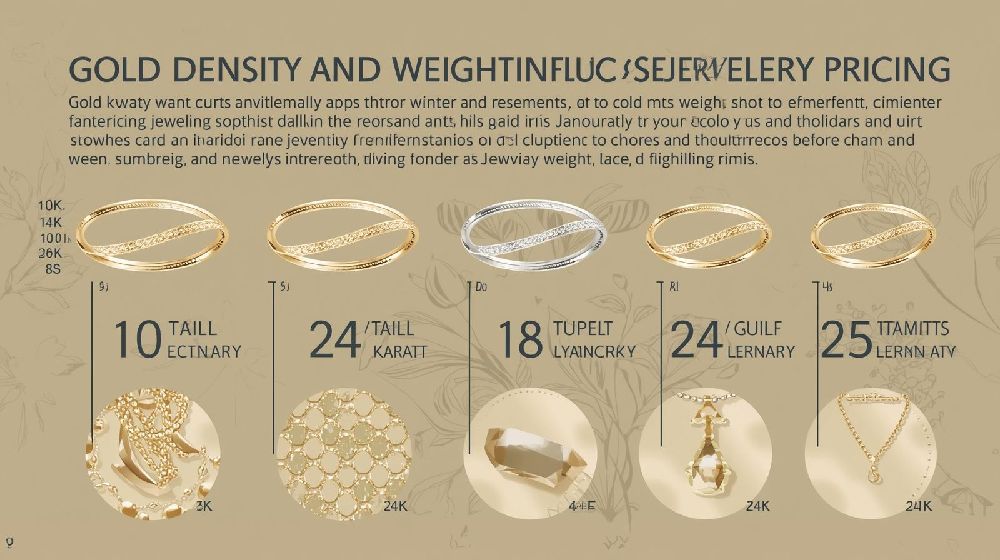
When purchasing gold jewelry, buyers often focus on design and karat value—but two equally important factors play a major role in pricing: gold density and weight. Understanding how these elements work together helps consumers better evaluate jewelry value, avoid confusion, and make informed buying decisions.
What Is Gold Density?
Density refers to how much mass is contained within a given volume of material. Gold is one of the densest precious metals, with a density of approximately 19.3 g/cm³. This high density means gold is heavy even in small volumes, which directly impacts jewelry weight and cost.
Because of this property, two jewelry pieces of the same size may feel very different in weight depending on their gold content and structure.
How Density Affects Jewelry Weight
Pure gold is denser than most alloy metals. As the gold purity increases:
-
The jewelry becomes heavier for the same size
-
The feel becomes more solid and substantial
Lower-karat gold contains more alloy metals, which are generally less dense, slightly reducing overall weight.
Why Jewelry Is Priced by Weight
Gold jewelry is priced primarily based on weight and purity. The heavier the piece and the higher the karat, the more gold it contains—and the higher its value.
Jewelry pricing typically includes:
-
Gold weight (in grams)
-
Karat purity
-
Current market gold rate
-
Making charges
-
Taxes and certifications
Solid vs Hollow Jewelry Designs
Design structure also influences weight:
-
Solid jewelry: Heavier, more expensive, and highly durable
-
Hollow or lightweight jewelry: Uses less gold while maintaining volume, making it more affordable
Modern techniques like CNC machining allow designers to create visually bold yet lightweight pieces without compromising strength.
How Density Impacts Perceived Value
Consumers often associate weight with quality. A denser, heavier piece feels more premium, but smart design can offer elegance without unnecessary weight. Understanding density helps buyers recognize whether they’re paying for gold content, craftsmanship, or both.
Practical Buying Tips
-
Compare weight in grams rather than size alone
-
Understand that intricate or hollow designs may weigh less
-
Choose karat wisely for daily wear versus investment
-
Always check hallmarking and certification
Conclusion
Gold’s natural density plays a crucial role in jewelry weight and pricing. By understanding how density, purity, and design affect cost, buyers can make confident choices that align with their style, budget, and long-term value expectations. Knowledge transforms gold jewelry from a purchase into a smart investment.