
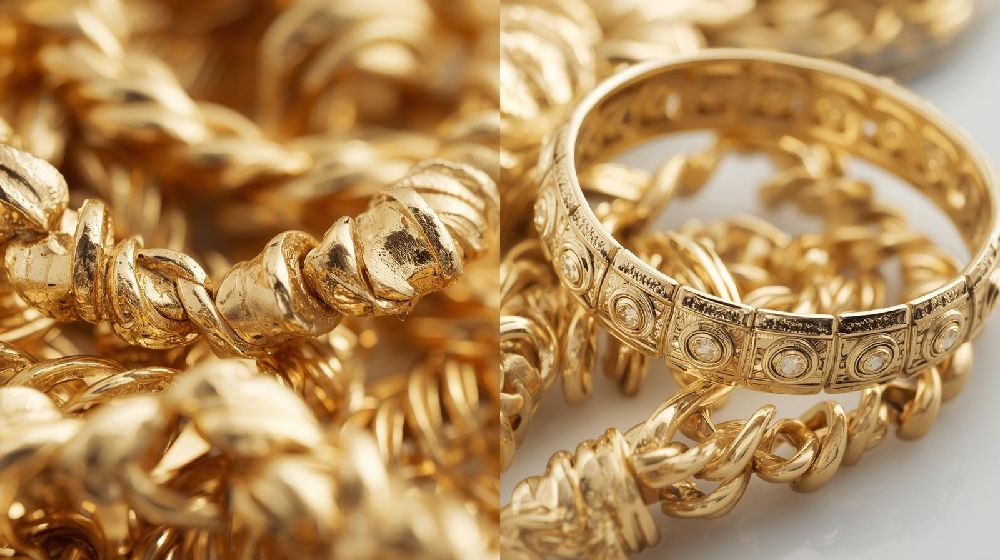
Gold jewelry has always been a symbol of elegance, wealth, and tradition. But in a market filled with plated, hollow, and imitation pieces, telling real gold from artificial gold can sometimes be confusing—especially for first-time buyers.
Whether you’re purchasing for investment or fashion, knowing the difference gives you confidence and protects your money. Here’s an easy guide to help you identify real gold like a pro.
1. What Counts as “Real” Gold?
Real gold jewelry refers to pieces made with solid gold of a specific purity—such as 22K, 18K, 14K, or 24K (pure gold).
Real gold is:
-
Durable
-
Non-magnetic
-
Tarnish-resistant
-
Hypoallergenic
-
Valuable
Artificial or fake gold can be:
-
Gold-plated
-
Brass
-
Copper
-
Stainless steel with gold color
-
Gold-filled metal
These may look similar at first glance but behave very differently over time.
2. Key Differences Between Real & Artificial Gold
A. Hallmarking – The Easiest Way to Identify Real Gold
Real gold jewelry comes with an official hallmark that includes:
-
Purity stamp (22K, 916, 18K, 750, etc.)
-
Assaying center mark
-
Jeweler’s identification mark
-
Year of hallmarking
If a piece has no hallmark, it's a major red flag.
Artificial gold rarely carries hallmarking because it cannot legally represent real gold.
B. Magnet Test
Real gold is not magnetic.
If your jewelry gets attracted to a magnet, it’s most likely:
-
Plated
-
Brass
-
Copper
-
Mixed metal
However, not all non-magnetic jewelry is real gold, so treat this as an initial test only.
C. Color & Shine
Real gold has:
-
A warm, rich, natural yellow glow
-
Consistent color throughout the piece
Artificial gold often has:
-
A very bright, overly shiny look
-
Uneven coloring
-
Peeling or fading after use
If the gold looks too yellow or too shiny, it could be imitation.
D. Weight Check
Gold is a dense and heavy metal.
Real gold pieces feel heavier than their artificial counterparts.
Fake or plated jewelry often feels:
-
Light
-
Hollow
-
Cheap
This test works well for chains, bangles, and rings.
E. Scratch Test
Carefully scratching a hidden area can reveal the metal underneath.
-
Real gold remains gold-colored beneath the surface
-
Artificial or plated jewelry will reveal another metal (like copper or steel)
Note: Do this only if safe or with a jeweler.
F. Acid Test (Performed by Professionals)
A jeweler uses nitric acid to test purity.
-
Real gold does not react
-
Fake gold may change color, bubble, or dissolve
This is one of the most trusted tests for identifying authenticity.
G. Price Check
Real gold is expensive because of:
-
High metal value
-
Craftsmanship
-
Hallmarking charges
If the price seems too good to be true, it probably isn’t real gold.
3. Types of Artificial Gold Jewelry You Should Know
Gold-like jewelry comes in many forms:
1. Gold-Plated
A very thin layer of gold over another metal. Wears off easily.
2. Gold-Filled
Thicker than gold-plated but still not solid gold.
3. Imitation / Costume Jewelry
Made from brass, copper, alloy, or steel—only looks like gold.
4. Micro-Plated Jewelry
Modern plating method, more durable but still not real gold.
Knowing these helps you understand what you’re paying for.
4. Why Real Gold Is Worth Investing In
-
Retains long-term value
-
Can be resold easily
-
Never tarnishes
-
Ideal for gifting & inheritance
-
Safe for sensitive skin
-
Symbol of prestige and purity
Artificial jewelry is good for fashion use, but real gold is both beauty and an asset.
5. Final Tips to Avoid Fake Gold
-
Always buy hallmarked gold
-
Purchase from trusted jewelers
-
Check invoice purity & weight
-
Learn basic testing techniques
-
Ask for authentication certificates
Conclusion
Real gold jewelry offers unmatched value, durability, and beauty, while artificial pieces are designed only for temporary style. With the right knowledge, you can easily tell the difference and make smarter, safer purchases.
Whenever in doubt, trust hallmarking and professional testing—they give you the peace of mind you deserve.