
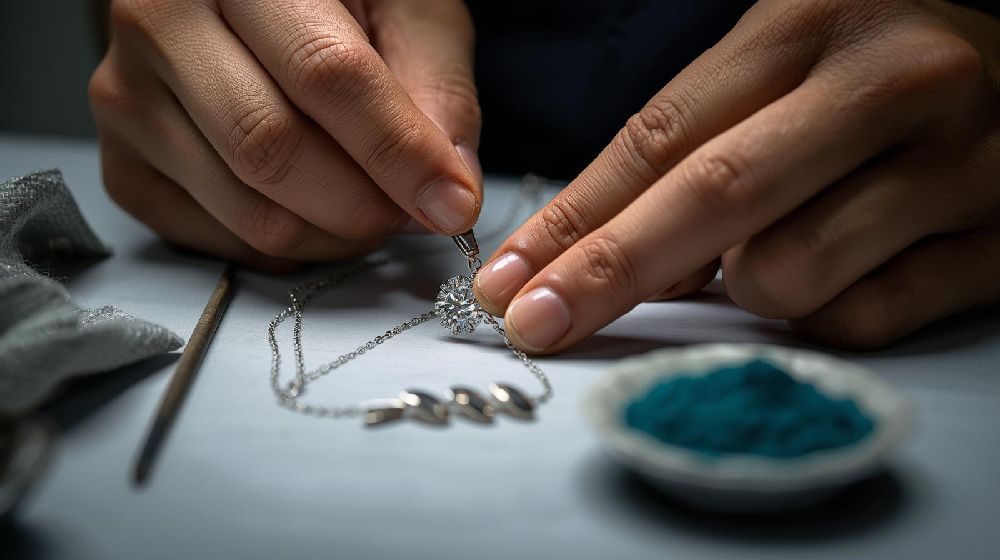
Where craftsmanship meets shine, and raw gold transforms into wearable beauty
Jewelry manufacturing is a long and intricate process, but the final magic happens during the polishing, plating, and finishing stages. These steps decide how the jewelry looks, feels, and shines when it reaches the customer. Even the finest design or most advanced manufacturing technique is incomplete without expert finishing.
Let’s explore how these final touches bring gold jewelry to life.
1. Polishing: Turning Rough Surfaces Into Mirror Perfection
Polishing is the art of smoothing the surface of the jewelry for a flawless shine.
Why Polishing Matters
-
Removes scratches and casting marks
-
Smoothens edges for comfortable wear
-
Enhances the natural shine of gold
-
Prepares the surface for plating or texturing
Types of Polishing Techniques
-
Hand Polishing: Using brushes, buffs, and compounds for detailed control.
-
Machine Polishing: Faster and ideal for large batches.
-
Magnetic Polishing: Used for intricate pieces like chains.
-
Ultrasonic Cleaning: Removes dirt and polishing residue.
Well-polished jewelry shines brighter and looks more luxurious—no matter the karat or design.
2. Plating: Adding Color, Strength & Durability
Plating involves coating the jewelry with a thin layer of another metal to enhance its appearance and lifetime.
Popular Types of Plating
-
Rhodium Plating (White Gold): Gives a bright, icy white finish.
-
Gold Plating (Yellow/Rose): Adds rich tone and uniform color.
-
Two-Tone Plating: Combines different colors for modern designs.
-
Anti-Tarnish or Protective Coating: Improves durability and shine.
Why Plating Is Essential
-
Makes jewelry resistant to scratches
-
Enhances brilliance and color consistency
-
Protects against oxidation
-
Gives new life to old jewelry during repairs
In modern lightweight and CNC jewelry, plating plays a big role in overall beauty.
3. Finishing: The Final Artistic Touch
Finishing refers to the last stage where the jewelry’s surface is perfected based on style and design.
Types of Finishes
-
High Gloss / Mirror Finish: Bright, reflective, premium look.
-
Matte/Satin Finish: Soft, elegant, and contemporary.
-
Textured Finish: Patterns created using tools or laser.
-
Hammered Finish: Unique handmade dents for a rustic effect.
-
Brushed Finish: Linear strokes for a modern aesthetic.
Each finish gives the jewelry its own personality and enhances design details.
4. Quality Check – Ensuring Perfection Before Delivery
After polishing and plating, every piece undergoes detailed inspection.
What Is Checked
-
Color consistency
-
Smooth edges
-
Shine and surface reflection
-
Stone security (if applicable)
-
Weight and purity verification
-
Comfort of wear
Only jewelry that passes all quality stages gets approved for branding and packaging.
5. Why These Final Steps Matter
Polishing, plating, and finishing may look small compared to casting or CNC, but they are the steps that customers notice first.
They Decide:
-
How bright the piece looks
-
How comfortable it feels
-
How long it maintains its shine
-
How premium and professional the design appears
In today’s competitive jewelry market, flawless finishing is the key to premium craftsmanship.
Conclusion
Polishing, plating, and finishing turn raw, unrefined gold into a piece of art. They elevate craftsmanship, add durability, and ensure that every piece of jewelry truly comes to life. Whether it's a simple chain, a bridal set, or a modern CNC bangle, the final shine is what wins the customer’s heart.
Beautiful jewelry isn’t just made…
It’s finished to perfection.